Tuesday, June 20, 2017

Introducing The Photo Paragraph


Following in the tradition of Brevity, which features very brief (750 words or less) non-fiction essays, and Flash Fiction, which includes all the very brief fiction forms, my focus has turned to a brief version of the Photo Essay, called the Photo Paragraph. The Photo Paragraph shows a complete action, thought or concept in three related or consecutive photographs.

For the last few years I considered the concepts of telling stories with photography. My curiosity prompted me to take several art courses in photography dealing with art history and early photojournalism rather than craft or technique, and to read extensively in the same areas. During this time I noticed an increase in photo essays, those stories told usually in a minimum of 5 and up to 20 photographs. They included setting the scene, closer views, detail shots, action shots, and concluding shots with brief captions and very little narration. Since my platform for publishing includes retail (one at a time) or the blog, I wanted a shorter form.

 My writing in recent years turned me in the direction of personal essays and short stories, which curiosity again drew me to very brief essay forms such as Brevity and Flash Fiction. It also renewed my interest in Haiku, from which I borrowed the concept of three.

I started looking at some of my work in photography as a story in threes. I shoot far more than three of course, and sometimes the direction in which I started veers off another way when I examine the resulting photographs. This first Photo Paragraph is a beginning. I will be posting others as they are created, and I expect the form to change and evolve as I move forward.

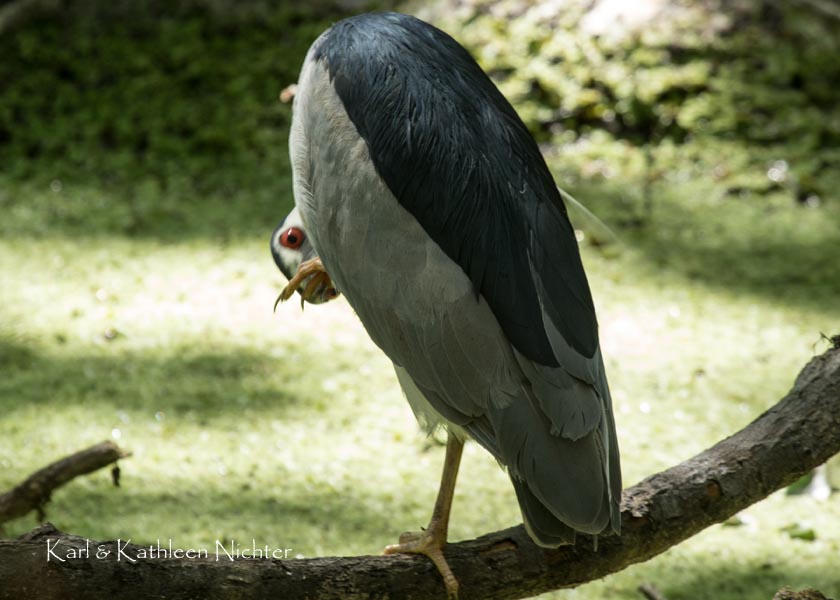
This is a first attempt: Heron grooming while hikers watch
Checking out the people staring

Deciding we were no threat and going back to what he was doing

Bit awkward, but it works

Thursday, June 15, 2017

Relaxing in the Water


We walked by this pond on a hot, sunny day. I noticed several somethings floating in the water. As we approached, they all moved away, and we saw then that the turtles found the ideal place to relax. I waited patiently until they decided we were harmless, and started swimming around and then floating again. This one caught my eye, and with the camera I not only caught him but the sparkle of the water. And yes, I wish I could have joined them, the temperature passed 90 degrees that day!

Tuesday, June 13, 2017

Garden Photography – Fun and Challenging


For years, whenever we purchased a new camera or lens, or had friends ask for some help with their cameras, we headed to one of two places for a test shoot: A local botanical garden or a local animal park. Both give us plenty of subjects, lighting, angles, and scenes to take plenty of shots to test our new addition, or show and explain to others techniques for using their cameras.

Lately we have been exploring the specialty of garden photography, and approaching it from a more formal perspective. When we travel we not only look for parks and preserves for nature photography, but local gardens. I didn’t realize that garden photography morphed over the years from a small specialty practiced by few to a popular segment of photography on its own. Not surprising, I found more professional garden photographers in England, also the home of the Professional Gardener Photographers’ Association. Link here: https://www.professionalgardenphotographers.com/

The basics of garden photography remain the same as any other area of photography done primarily outdoors. The most important question to ask yourself: What is my purpose? Is it to show the overall design of the garden, either yours or another? Do you want to show off a specific species of flower or bloom? This guides your shooting. Nearly all the experts advise an establishing shot first of the garden. A few break away from the crowd, and comment that the establishing shot of a garden generally appears very ‘busy’, and they tend toward more detail shots immediately.

I like the concept of sectioning. If I feel the garden is too large, or just contains too much (in my opinion of course) to do justice in an overall establishing shot, I focus on sections and try to overlap my photos to establish a cohesive picture without overwhelming.

In this case, my overall shots of this gorgeous rose garden at the Dothan (AL) Botanical Gardens simply overwhelmed. The curved path leading to the arch gave me the leading lines I wanted, but the roses became lost with the tree background. Unfortunately, I did not have a ladder or step-stool with me as this was a fun shoot rather than a work shoot. The height (I think) would have made that shot work. Instead, I moved over several feet and shot this on an angle.


Naturally, I moved in after that for some close-ups of the roses themselves. On a future visit we plan to arrive earlier to give us more time before the light becomes too harsh.

Thursday, June 8, 2017

Providence Canyon: Photo Essay

The bottom of the canyon with rivulets of water.


Butterfly on leaf on canyon bottom


Incredible carving and color


One of several 'cuts' in the walls

Chimney looking formation against blue sky
From above at the overlook

Tuesday, June 6, 2017

Providence Canyon: Georgia’s Little Grand Canyon


We never heard of this place. We told friends that we planned on camping in Marianna, FL and as part of the trip hoped to get to some of the Georgia State Parks. They told us not to miss this one, and emailed some photographs they took.


Intrigued by the photographs and the information found on the Internet, we decided to add it to our list. According to the Georgia park’s site, the massive gullies extend as far as 150 feet deep. Erosion from poor farming practices in the 1800s caused this man-made wonder. We planned our trip for a Wednesday to coincide with the visitor center opening days. Through the gift shop a door leads to a small but very well done history and interpretation of the area. From there, we left and walked down to the canyon floor. The trail can be steep and curvy in places, and the trip back up somewhat strenuous. We saw several people coming back up pausing to catch their breath as we made our way down. Wear shoes that can get wet, and be aware that the reddish Georgia earth will stain from the rivulets of water etching the ground at the bottom.


We followed the signs to the canyons and came upon the first cliff face. It was mid-morning on a hot, clear, sunny day, and all the colors in the face of the cliff showed beautifully. A jogger went by, clearly a local person who used the trail and canyon for her morning run, and we saw several people along the way walking their dogs. One woman told us she started coming there before the state created the trail, and loved it so much she still visits all the time.
 
Karl walking along trail
The park opens at 7 a.m., and during the hotter weather arriving early would make the hike more comfortable. The admission is $5. I took a lot of photographs. A polarizing filter would have been helpful, but I did not have one with me and still managed some good shots.

Here is part 1 of the photographs. The next blog will be a photo essay of more of the canyons.

Thursday, June 1, 2017

Fun at Florida Caverns in Marianna Florida


Whenever we mention Florida Caverns someone always gives us a puzzled look. Florida has many caves and caverns, most of them water filled in the vast spring system. Florida Caverns State Park contains one of the only dry (air filled not water filled) caverns in Florida, and the only one that offers a tour.

Found and developed in the 1930s by workers with the Civilian Conservations Corps (CCC), work ceased in 1942 with the onset of World War II. The park opened to the public that same year. The workers cleared the cave area now used on the tour by hand, with light from lanterns. Imagine that while on your tour with the now ever present electric lights.
 
One of the first "rooms" as soon as you enter the cavern
The $8.00 per person tour starts at the Gift Shop, which also sells the tickets. The tours tend to be popular, and the number per tour limited. They leave every 30 minutes with the last one at 4:00 so if the next one is booked, a later one may be available. The tour involves walking on sometimes uneven, sometimes wet and often narrow stone paths, occasionally while simultaneously crouching down to avoid hitting your head on low rocks. The park classifies it as mildly strenuous. The tour lasts about 45 minutes. For those who worry feeling closed in, I suffer from mild claustrophobia, and I have taken this tour several times with no problem.

The guide reminds you not to touch anything, and stay with the group. Then, the guide leads the group to the door and into the cavern. I found the cavern temperature pleasant, not cool enough for a jacket as in other cave tours. The interpretation varies by guide, but each covers all the topics.

The various formations include the stalactites and stalagmites we learned about in school, and also ones I never heard such as soda straws, flows, and draperies. The “rooms” in the cave have been given interesting and fanciful names after the formations seen there, such as “Wedding Cake”, “Enchanted Forest”, and even “Donald Duck” for a formation that appears to be a duck’s head. At the end of the tour we exit back into the quiet green of the park and walk along a trail back to the parking lot.

That really is a pool of water you see
I photographed the cave with my 7D and a 24 – 105mm lens. I set the ISO at 800 to start, and did some initial test shots, increasing the ISO until I felt comfortable with the shutter speed and the results. One word of warning: others on the tour may be using cameras with automatic flash or cell phones with the same. If they flash as you press the shutter, you end up with a white screen. Wait a minute, and reshoot when they finish.